




The Best Low FODMAP Snack Bars: A Complete Guide
If you've been managing IBS long enough to discover the Low FODMAP diet, you've probably also discovered how quickly a snack bar can undo a careful day of eating. One bar labeled "natural" and "gut-friendly" with chicory root fiber listed in the ingredients. Another with honey and dates as the primary sweeteners. Another that's gluten-free — which many people assume means FODMAP-safe — but contains ingredients that will reliably trigger symptoms.
This guide exists because most Low FODMAP snack bar roundups don't explain their selection criteria, don't distinguish between certified and self-reported bars, and haven't been updated to reflect what's actually available in 2026. The picks here are evaluated against a consistent framework, organized by use case and by brand, and focused on bars that have been lab-tested and certified rather than bars that seem like they should be fine.
Why Most 'Healthy' Snack Bars Are FODMAP Traps
The snack bar category has been taken over by ingredients that the wellness industry markets as functional and the Low FODMAP community knows as triggers.
Chicory root fiber and inulin are the most common hidden offenders. They are cheap, naturally derived prebiotic fibers that dramatically improve a bar's nutritional label by boosting fiber content without adding bulk. They also ferment rapidly in the gut and are among the highest-FODMAP ingredients in the food supply. They appear on labels under multiple names: chicory root, chicory root extract, chicory root fiber, inulin, and fructooligosaccharides. Any bar containing any of these is high FODMAP, regardless of how it's marketed.
Honey and agave syrup are used as natural sweeteners in bars positioned as refined-sugar alternatives. Both are high in excess fructose and are significant FODMAP triggers. High-fructose corn syrup carries the same concern. Dates, the base ingredient in many natural bar formats, including LARABAR and similar products, are high FODMAP due to their sorbitol and fructose content.
Sugar alcohols, including sorbitol, mannitol, xylitol, and isomalt, are used as low-calorie sweeteners across a wide range of products marketed to health-conscious consumers. All are polyols and FODMAPs.
One misconception worth addressing directly: gluten-free does not mean Low FODMAP. Many people with IBS who are early in their learning curve equate these two categories. A gluten-free bar can contain dates, honey, chicory root, and dried apricots and remain entirely gluten-free while being aggressively high FODMAP. The labels serve different purposes, and for IBS management, only one of them matters.

How to Choose a Low FODMAP Snack Bar — Our Evaluation Criteria
Every bar in this guide was evaluated against the same five criteria. Understanding these criteria gives you the ability to evaluate any bar independently, including options released after this article was published.
Criterion 1: Certification. Lab-tested certification from a trusted program, such as FODMAP Friendly, is one of the strongest indicators of FODMAP safety at the product level. Self-reported claims, "IBS-friendly" marketing language, and brand reputation carry far less weight — they are not substitutes for independent verification. Certification requires the actual product, at its actual serving size, to be tested and confirmed below FODMAP threshold levels. Self-reported compliance requires nothing.
Criterion 2: Ingredient Audit. Even for certified bars, the ingredient list should be free of inulin, chicory root in any labeled form, honey, agave, high-fructose corn syrup, and high-FODMAP dried fruits. For savory bars, garlic powder and onion powder are disqualifying.
Criterion 3: Serving Size Awareness. FODMAP thresholds are portion-dependent. Several ingredients that are safe in small quantities become triggering above a specific dose. Certification specifies a serving size, and that serving size matters. Eating two servings of a certified bar does not guarantee it is Low FODMAP.
Criterion 4: Macronutrient Balance. A bar with 5g or more of protein, meaningful fiber content, and sugar that isn't the dominant macronutrient is better suited to IBS management than a high-sugar bar that happens to be certified. Sugar drives rapid fermentation even from low-FODMAP sources at high doses.
Criterion 5: Use-Case Fit. Travel, post-workout recovery, breakfast replacement, and everyday snacking have different macronutrient requirements. A bar optimized for morning satiety is not the same as a bar optimized for shelf-stable travel convenience.
The Best Low FODMAP Snack Bars in 2026 — Top Picks
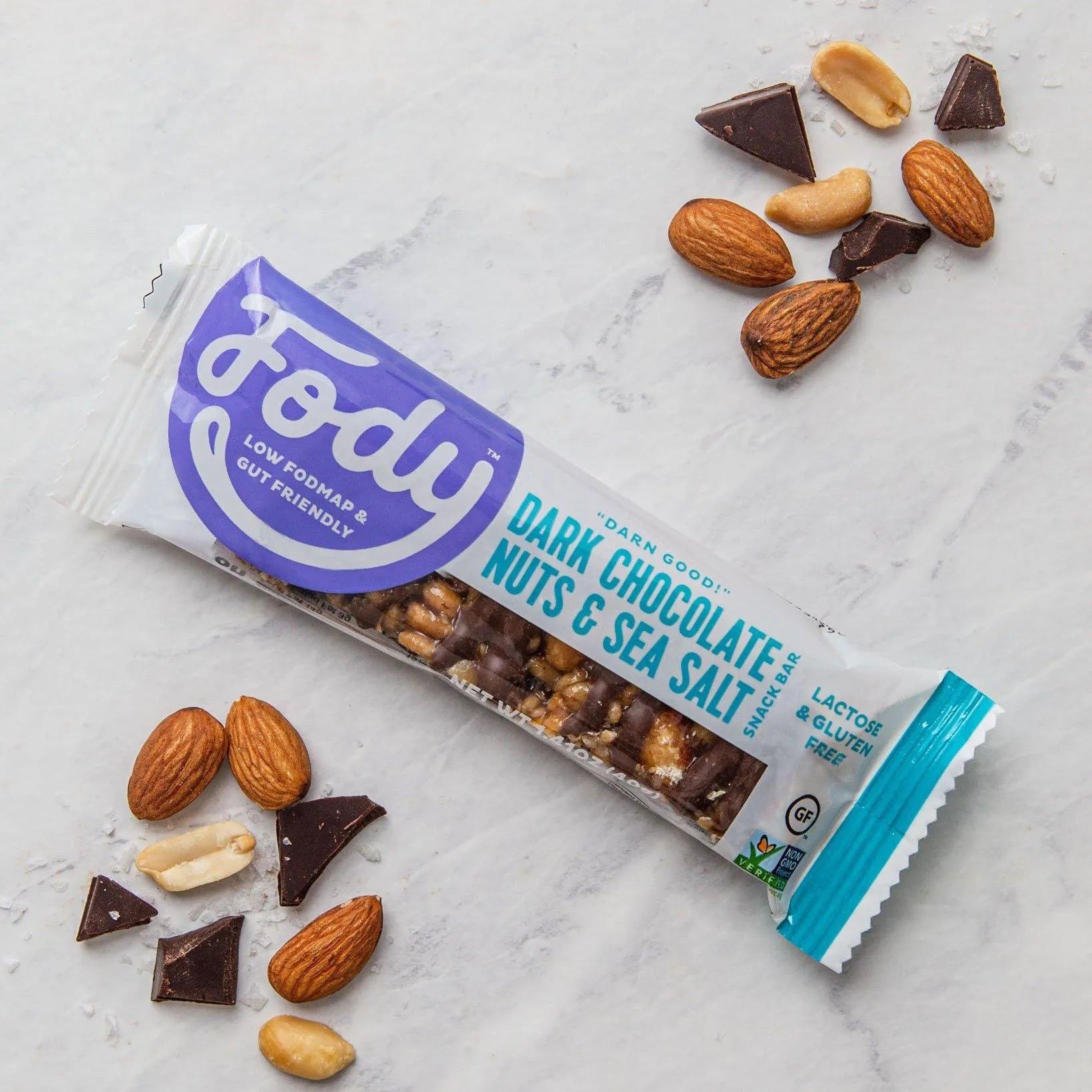
Fody Dark Chocolate Nuts & Sea Salt Bar
The Dark Chocolate Nuts & Sea Salt bar is Fody's most versatile everyday option. FODMAP-certified, gluten-free, lactose-free, vegan, and non-GMO, it delivers 5g of protein, 3g of fiber, and 7g of sugar in a form that works as a desk snack, post-meal treat, or afternoon energy bridge without ingredient-related risks.
What sets it apart from other dark chocolate nut bars on the market is the ingredient list. No chicory root. No honey. No sugar alcohols. The chocolate-and-nut combination found in many competing products almost always contains at least one hidden FODMAP trigger. This one doesn't.
Fody Almond Coconut Bar
The Almond Coconut Bar carries the highest protein content in the Fody lineup at 5g, with 5g of sugar, making it the lowest-sugar option across the core range. For people managing IBS-D specifically, where blood sugar stability and reduced fermentation load are both relevant, the lower-sugar, higher-protein profile makes this the most appropriate daily bar.
The almond and coconut combination produces a naturally satisfying fat-to-protein ratio without relying on dates, honey, or inulin to achieve sweetness or texture, which is exactly the formulation gap that most natural bar alternatives fail to address.
Fody Peanut Butter Chocolate Quinoa Bar
The PB Chocolate Quinoa Bar uses quinoa as its base rather than oats, resulting in a distinct, slightly crunchier texture while maintaining full FODMAP certification. With 6g of protein, 2g of fiber, and a salty-sweet flavor profile, it is the most satisfying option for hunger management and post-workout recovery in the Fody lineup.
It is also one of the most travel-reliable bars in this guide. The quinoa base holds its structure better in warmer temperatures than chocolate-heavy bars, which can soften significantly.
Fody Blueberry Almond Bar
The Blueberry Almond Bar delivers a fruity flavor profile without the high-FODMAP dried fruits that make most fruit-forward bars off-limits for IBS management. Standard fruit bars use dried apricots, dates, raisins, or figs as binding agents. This bar delivers a blueberry profile while remaining fully certified, making it the strongest pre-exercise or morning snack option for those who want something lighter before activity.
Low FODMAP Protein Bars — When You Need More Than a Snack
Evidence Rating: Practical nutrition guidance
The terms "snack bar" and "protein bar" are used interchangeably in most roundups, but they represent meaningfully different nutritional profiles. A snack bar typically delivers under 8g of protein and is designed as a between-meal energy source. A protein bar targets 10g or more and is designed to contribute meaningfully to daily protein intake or support muscle recovery after exercise.
This distinction matters specifically on the Low FODMAP diet because the protocol eliminates or significantly restricts several high-protein food categories. Most legumes are high FODMAP. Dairy in large quantities is restricted for individuals who are lactose-sensitive. This means that protein sourcing on a Low FODMAP diet often needs to be more intentional than on an unrestricted diet, and a bar that contributes meaningful protein has real dietary value beyond convenience.
Protein source identity matters for FODMAP compliance. Soy protein isolate is generally considered Low FODMAP at standard serving sizes and is the most common plant-based protein used in certified bars. Whey concentrate contains lactose and is problematic for people with lactose intolerance, which overlaps significantly with IBS. Casein is similarly dairy-derived and carries the same concern. Pea protein is generally well-tolerated and increasingly used in certified options.
Many protein bar formulations are not reliably Low FODMAP due to their ingredient composition. Dates are commonly used as a primary binding ingredient, but they are high FODMAP. Other formulations rely on ingredients such as chicory root fiber or inulin to increase fiber content, which can trigger digestive symptoms in sensitive individuals. Honey is another ingredient frequently used that may not be well tolerated in an IBS context.
For these types of products, the absence of a trusted Low FODMAP certification on the specific product is a meaningful reason to choose differently when IBS is actively being managed.
Low FODMAP Bars by Use-Case — Which Bar Fits Your Day?
Most bar guides organize recommendations by brand or macronutrient profile. Organizing by use case is more useful in practice because the criteria for a good travel bar differ from those for a good breakfast replacement, even for the same person.
Best Low FODMAP Bar for Travel and On-the-Go
Travel demands a bar that is shelf-stable across a range of temperatures, compact, non-messy, and resistant to melting or structural collapse in a bag or pocket. For these criteria, the Fody Dark Chocolate Nuts & Sea Salt Bar and the Fody Peanut Butter Chocolate Quinoa Bar are the strongest options. Both have structural integrity that holds in warmer conditions, holds well, and both are certified, so there's no label-reading risk when you're already navigating a travel environment where food choices are limited.
The practical value of having certified bars in your bag during travel extends beyond the snack itself. Airports, transit hubs, and unfamiliar food environments are where Low FODMAP compliance most reliably breaks down. Having a certified bar removes one decision from an already difficult food environment.
Best Low FODMAP Bar for Morning or Breakfast
Morning bar criteria center on fiber and digestive tolerance to sustain energy and satiety without triggering a crash. Fiber-focused bars are the most appropriate choice for morning use, as they are specifically designed to support digestive function and provide stable energy release.
For this use case, Low FODMAP–certified fiber bars offer the most reliable option for both satiety and digestive stability.
Best Low FODMAP Bar Post-Workout
Post-workout recovery prioritizes protein for muscle repair and carbohydrates to restore glycogen. The most effective options are Low FODMAP–certified bars with balanced macronutrients, offering sufficient protein alongside digestible carbohydrates to support recovery without triggering symptoms. Choosing a certified option ensures tolerance during a physiologically sensitive window.
Best Low FODMAP Bar for Nut-Free Needs
For individuals managing IBS alongside nut allergies or sensitivities, seed-based bars are the most appropriate choice. These formulations provide a complete nutritional profile while remaining free from common allergens. Selecting a Low FODMAP–certified, nut-free bar ensures both digestive safety and suitability for school-safe or restricted environments.
How to Read a Snack Bar Label for FODMAPs
The fastest path to a safe bar is certification. The second-fastest is knowing exactly what to look for on an ingredient list.
Red-flag ingredients that disqualify a bar immediately, regardless of any other marketing claim:
Inulin, chicory root, chicory root fiber, chicory root extract, and fructooligosaccharides are all names for the same high-FODMAP prebiotic fiber. If any of these appear in the ingredient list, the bar is high FODMAP. The position in the list doesn't matter — even small amounts of chicory root are problematic for IBS management.
Honey, agave syrup, agave nectar, and high-fructose corn syrup are high-fructose sweeteners. All are high FODMAP. These appear frequently in bars marketed as natural or refined-sugar-free.
Sorbitol, mannitol, xylitol, and isomalt are polyols and FODMAP triggers. They are used as low-calorie sweeteners across the bar category. Erythritol is also a sugar alcohol but is not classified as a FODMAP by Monash University; it is well absorbed in the small intestine and generally well tolerated at typical serving sizes.
Dates, dried apricots, raisins, sultanas, and figs in any significant quantity are high FODMAP. A small amount of dried cranberry or dried blueberry in a certified bar may be within threshold, but these ingredients in a non-certified bar warrant caution.
Cashews and pistachiosPistachios are high FODMAP among nuts and appear frequently in trail-mix-style bars. Almonds are Low FODMAP in small servings, typically up to 10 whole almonds.
For savory bars, garlic powder and onion powder are disqualifying regardless of quantity. Both are among the highest-FODMAP ingredients available, and there is no safe serving size for people managing active IBS.
One nuance worth understanding: some borderline ingredients are safe within certified serving sizes even though they would be triggering in larger amounts. This is precisely why trusted Low FODMAP certification is more reliable than DIY label reading. Certification confirms that the specific product at the specific labeled serving size has been tested and confirmed to be below FODMAP thresholds. Label reading tells you what's in the bar. It doesn't tell you whether the amounts are within safe limits without validated testing.
The safest shortcut: look for a trusted Low FODMAP certification logo on the packaging before reading anything else. If it's there, the label-reading exercise is confirmatory rather than evaluative.
How This Fits Into the Fody Foods Low FODMAP Lifestyle
The hardest part of the Low FODMAP diet is not the elimination phase. Most people can manage two to six weeks of strict restriction when motivation is high and the goal is clear. The harder problem is the six months after that, when the reintroduction is complete, and the personalization phase requires consistent daily choices in food environments that were not designed for FODMAP compliance.
Fody bars are purpose-built for this problem. No onion. No garlic. No chicory root or inulin. No honey or agave. Every product in the range has been tested and certified rather than self-reported, which removes the uncertainty that makes most alternative "safe" options unreliable during active IBS management.
The practical value is most visible in the situations where dietary compliance is hardest: work lunches when there's no time to prepare food, travel when airport options are universally problematic, and social situations where every available snack contains an ingredient you need to avoid. Having a FODMAP Friendly–certified bar available in these moments isn't a minor convenience. It's often the difference between a day where Low FODMAP compliance holds and a day where it doesn't.
Fody's product ecosystem extends beyond bars. The same certified ingredient standards apply across sauces, condiments, and pantry staples, which means the same label-reading confidence you apply to a bar can extend to a full Low FODMAP kitchen. The full snack bar range and the Low FODMAP Snack Pack are the easiest starting points for new and returning customers.
Conclusion
Finding a snack bar that is genuinely safe for IBS management is simpler than it appears once the evaluation framework is clear. Certification is the single most reliable filter. A bar with a trusted Low FODMAP certification logo on the specific flavor you are buying has been lab-tested at the labeled serving size and confirmed to be below the FODMAP threshold. Everything else, including self-reported claims, "natural ingredient" positioning, and gluten-free or vegan labeling, tells you nothing reliable about FODMAP content.
Fody's range remains the most comprehensive in flavor variety, with consistent certification across all products rather than select flavors, and formulations designed specifically for IBS management rather than general wellness.
The use-case framework matters because the same bar is not optimal for every situation. Travel demands structural stability and shelf life. Morning snacking requires protein and fiber to sustain satiety. Post-workout recovery prioritizes protein replenishment. Organizing bar selection around the situation rather than just the product makes daily Low FODMAP compliance more sustainable across a varied schedule.
To explore the full certified range, shop all snack bars to view all flavors. For a first purchase, trying a variety helps you find your preferences before committing.
References
- Gibson PR, Shepherd SJ. Evidence-based dietary management of functional gastrointestinal symptoms: the FODMAP approach. J Gastroenterol Hepatol. 2010;25(2):252–258. doi:10.1111/j.1440-1746.2009.06149.x
- Halmos EP, Power VA, Shepherd SJ, Gibson PR, Muir JG. A diet low in FODMAPs reduces symptoms of irritable bowel syndrome. Gastroenterology. 2014;146(1):67–75.e5. doi:10.1053/j.gastro.2013.09.046
- Staudacher HM, Whelan K. The low FODMAP diet: recent advances in understanding its mechanisms and efficacy in IBS. Gut. 2017;66(8):1517–1527. doi:10.1136/gutjnl-2017-313750
- Shepherd SJ, Parker FC, Muir JG, Gibson PR. Dietary triggers of abdominal symptoms in patients with irritable bowel syndrome: randomized placebo-controlled evidence. Clin Gastroenterol Hepatol. 2008;6(7):765–771. doi:10.1016/j.cgh.2008.02.058
- Muir JG, Rose R, Rosella O, et al. Measurement of short-chain carbohydrates in common Australian vegetables and fruits by high-performance liquid chromatography (HPLC). J Agric Food Chem. 2009;57(2):554–565. doi:10.1021/jf802700e
- Lacy BE, Pimentel M, Brenner DM, et al. ACG Clinical Guideline: Management of Irritable Bowel Syndrome. Am J Gastroenterol. 2021;116(1):17–44. doi:10.14309/ajg.0000000000001036
So, what are you waiting for?
Shop from some of our best selling, low FODMAP foods.
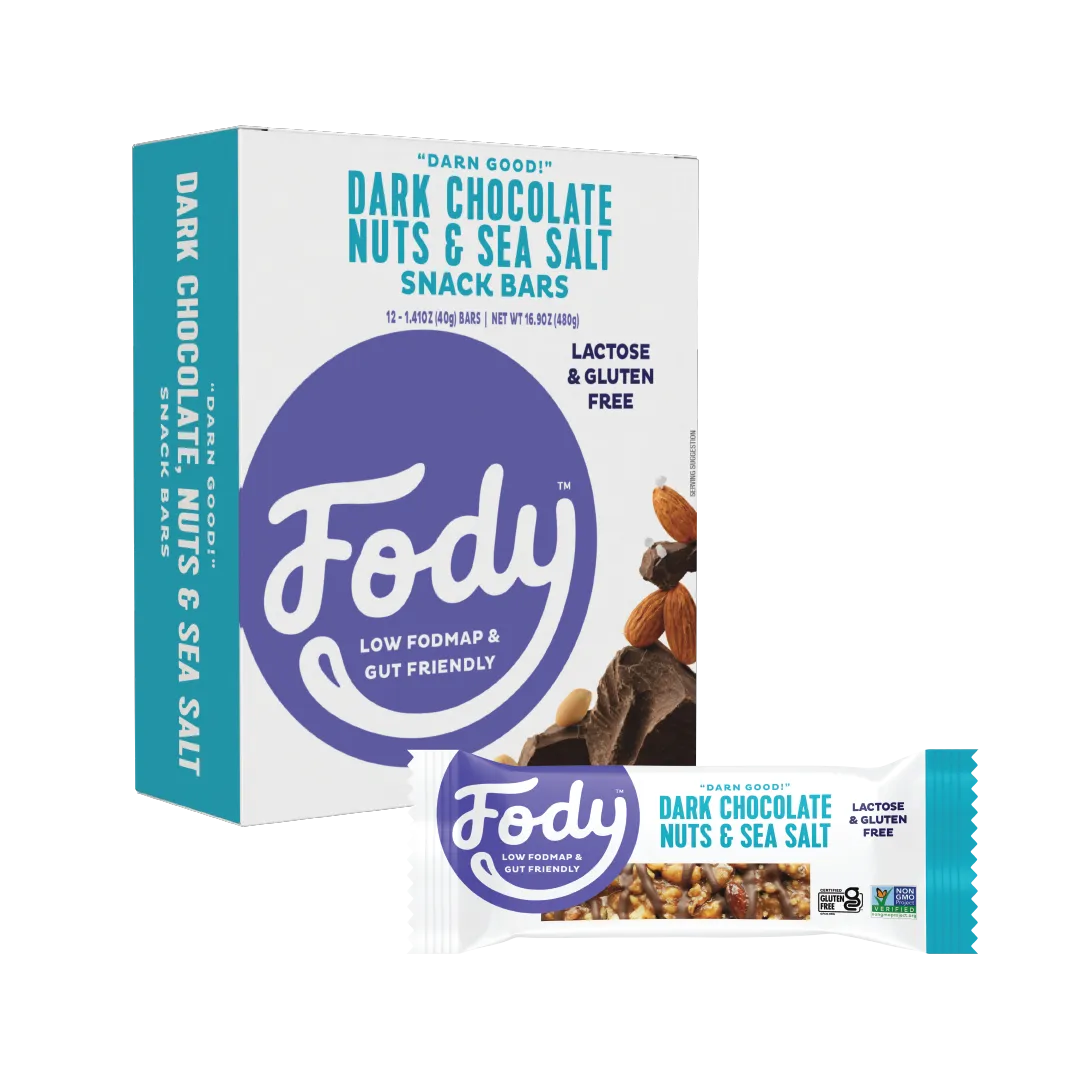
 Dark Chocolate Nuts & Sea Salt Snack Bars - Box of 12
Dark Chocolate Nuts & Sea Salt Snack Bars - Box of 12
$27.99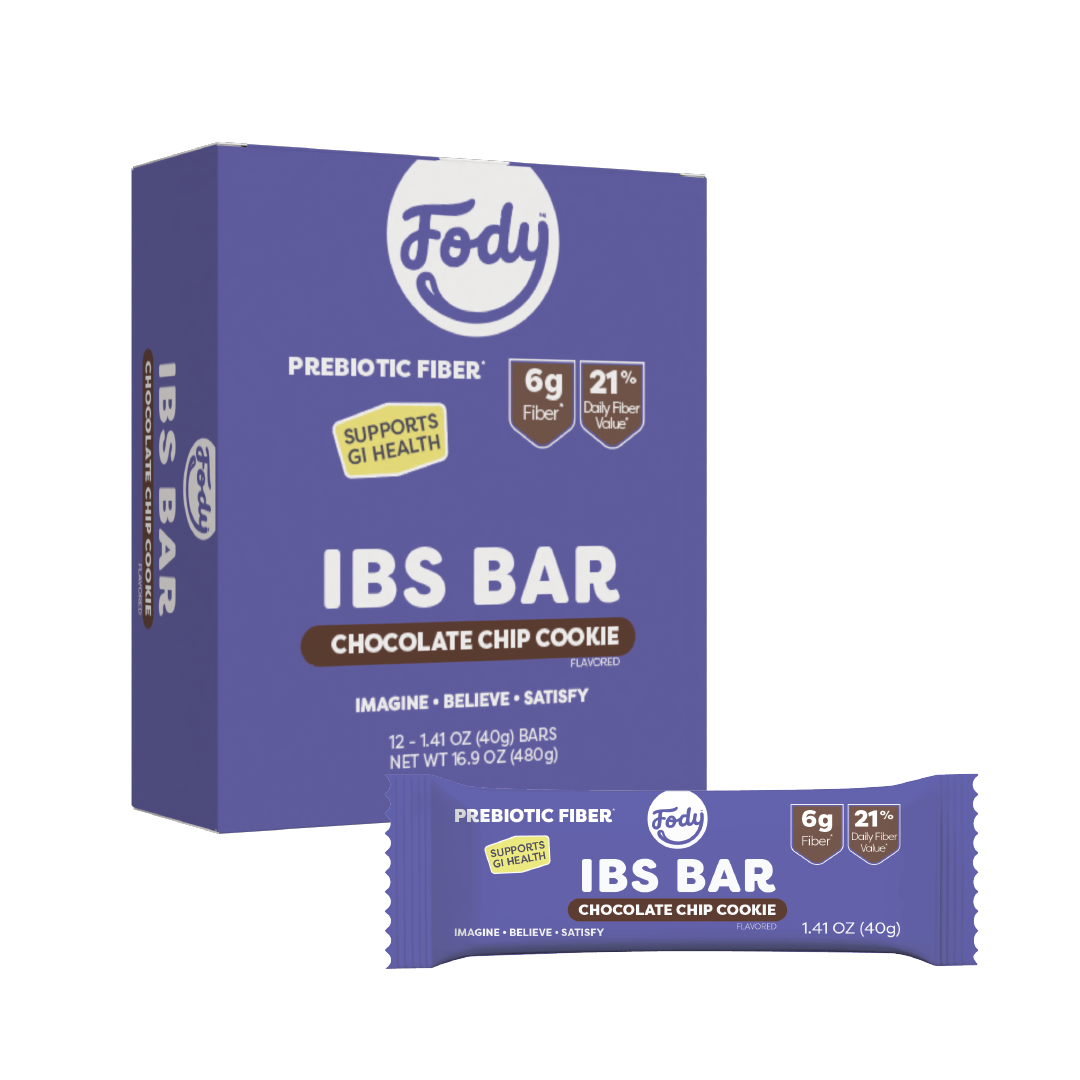
 Chocolate Chip Cookie High Fiber Snack Bar - 12 Pack
Chocolate Chip Cookie High Fiber Snack Bar - 12 Pack
$29.99


